Smart Management and Green Financing for Sustainable and Climate – Neutral Buildings in Central Europe – (MESTRI-CE)

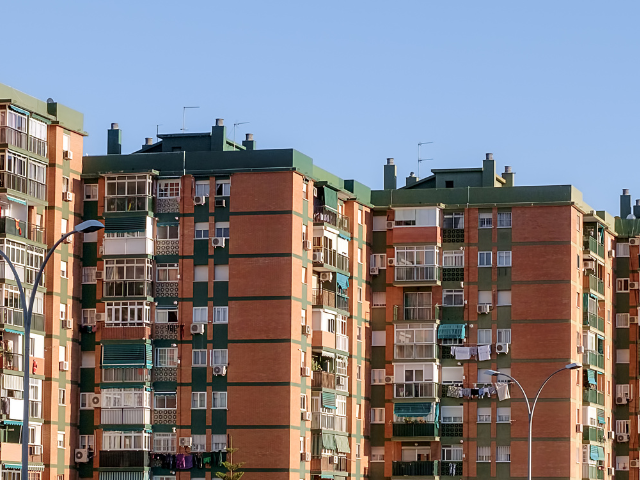
The MESTRI-CE project (Smart Management and Green Financing for Sustainable and Climate Neutral Buildings in Central Europe) introduces a new investment model for financing climate-friendly buildings that guarantee sustainability according to the requirements of the European Union. The model covers supply and demand in the renovation market, and is based on collected data tools and green standards developed during the project. The project will also establish five counseling centers in this area. The countries included in the project partnership are Croatia, Poland, Italy, Austria and Germany. The expected duration of the project is three years, from April 2023 to March 2026.

ZEZ’s role in the project:

  • Development of financing models for each country included in the project partnership
  • Development of communication content and implementation of information activities for citizens and small investors
  • Support in the management of the counseling center in Croatia
  • Development of tools for evaluation of financing models in consultation with key stakeholders in Croatia
  • Participation in the development of other project content and implementation of project activities

Follow the information about the implementation of this project: 

The project partners are, in addition to the Green Energy Cooperative (ZEZ), North-West Croatia Regional Energy and Climate Agency , e7 energy innovation & engineering, ENERGY AGENCY SOUTH TYROL/CASACLIMA, Energy Agency of Northern Bavaria, Mazovia Energy Agency, Jožef Stefan Institute, IPOPEMA Financial Advisory, Energy Agency of Styria and Zagreb Stock Exchange.

The project is financed by Interreg Central Europe (a funding program of the European Union).

ACCE - Access to Capital for Community Energy

Access to Capital for Community Energy – ACCE

Access to Capital for Community Energy – ACCE is a European project that aims to develop and scale up Community Energy Financing Schemes across Europe.

About 

Community energy projects are facing specific barriers, which need to be addressed through dedicated financing programmes and products.

The Access to Capital for Community Energy (ACCE) project aims to investigate, develop and scale innovative and collective financing tools for energy communities in Europe. Building on existing knowledge and working to meet the need for capital to finance European community energy, this EU-funded project marks a new step in the successful energy cooperative work.

ACCE partners will look into the creation of successful funding concepts at European level: Community Energy Financing Schemes (CEFS). Moreover, thanks to a diverse consortium, they will bring together national and regional funds to support the growth of local projects.

The final goal is to build a “bicycle highway” of community financing – a financing infrastructure dedicated to accelerating the development and scaling of community energy projects.


Key objectives

The key objectives of the ACCE project are:

  • To develop five CEFS in five target countries (Belgium, Germany, Croatia, Romania and Spain) to set up energy communities at national or regional level.
  • To enlarge and expand two existing CEFS (in scope and capital) in the Netherlands and France.
  • To set up a European intermediary to facilitate access to EU capital and funds by national CEFS.
  • To commit 20 million euros to new and existing CEFS.
  • To trigger 90 million euros of citizen investments through the creation of CEFS (referring to the amount of private capital invested in projects triggered by ACCE).


What is a CEFS ?

We consider a Community Energy Financing Scheme (CEFS) to be a financing scheme that funds community-based energy transition projects (sustainable energy, mobility, efficiency…) to overcome financial barriers that the community cannot overcome itself. The primary purpose of those projects is to provide environmental, economic or social community benefits rather than financial profits.

For example, in France, the cooperative Energie Partagée manages a fund dedicated to investing in community energy projects. The fund collects citizens’ savings, in the form of shares, to invest in renewable energy projects (solar panels, wind turbines, biogas and hydropower) together with public bodies and the private sector.

ACCE logo main

The ACCE project has received funding from the LIFE Programme of the European Union.

ACCE logo 1

ACCE logo 2

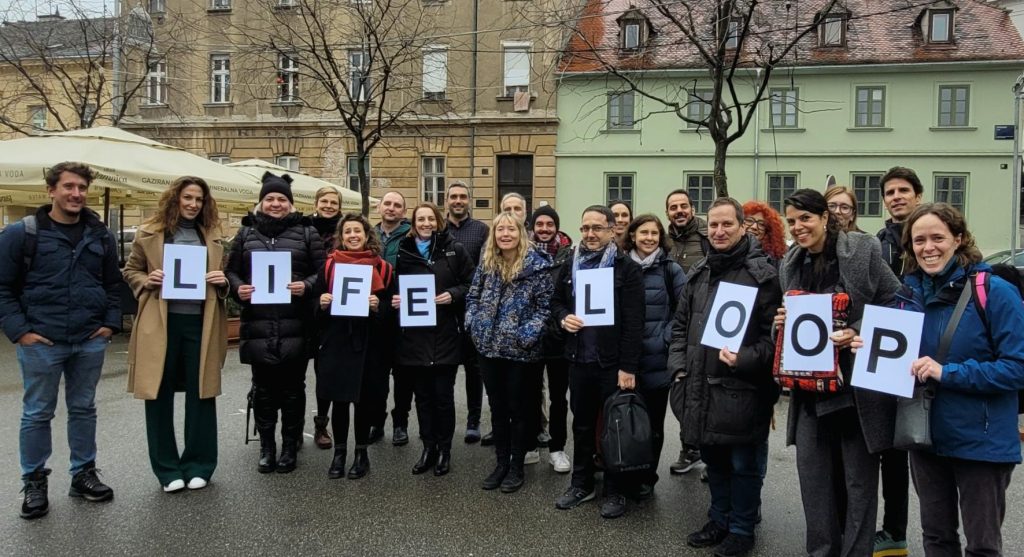
LIFE LOOP: energy communities development through partnerships between citizens and cities

It’s time to bring even more local governments, citizens and SMEs to the energy community movement!

With a focus on community and solar energy efficiency, we launched the LIFE LOOP project to connect local authorities and citizens. We want to enable them to participate on equal terms and embed energy justice. It’s time to make them the true drivers of our society.

Through the joint development of projects and new partnerships, we want to reach energy goals of local and European communities. By establishing energy communities and through mutual cooperation, citizens will have the opportunity to participate in the energy transition of their neighborhood in order to encourage local authorities to work according to their local energy and climate plans.

LIFE LOOP is a place to get information, build skills and make connections combining energy and gender justice in Croatia, Greece, Romania, Cyprus, Bulgaria and Italy.

The role of Green Energy Cooperative in the LIFE LOOP project is to ensure the successful implementation of new energy projects in the communities of the pilot areas. They will be based on the resources developed during the capacity building process and through stakeholder mapping.

We believe that cities and citizens are perfect allies. That is why we are part of #LifeLoopEU where we will develop community energy projects.

The project will last three years. We will initiate changes in three pilot areas: in the city of Zagreb in Croatia, Crete in Greece, Bistrita in Romania, and then in the replication locations, that is, Sardinia in Italy, Gabrovo in Bulgaria, Tulcea in Romania and Cyprus.

LIFE LOOP is launched by a group of professional organizations:

Community energy cooperatives: Green energy cooperative, Electra Energy, Cooperativa de Energie, Minoan Energy Community, ènostra cooperative.

European partners: Network of European cities Energy Cities and European federation of citizen energy cooperatives REScoop.eu.

Regional and local authorities: City of Zagreb (Croatia), Regional energy agency REGEA and City of Bistrita (Romania).

LIFE LOOP is funded by the European Union’s Environment and Climate Action Program (LIFE), Clean Energy Transition (LIFE-2021-CET).

Development of Energy Communities in Croatia

If we want to make a serious step forward in the transition to renewable energy and achieve the energy transition goals of the EU, we will need a large number of private investments in renewable energy. This is possible if citizens, companies, public bodies, and other stakeholders in the energy sector work together on community energy projects.

Through community energy projects:

  • Citizens and organizations achieve ownership rights to energy infrastructure and renewable energy sources;
  • Citizens take a more active role in the energy market (e.g. energy sharing);
  • A new wave of energy projects and investments is ensured.

The path towards citizen energy projects is facilitated by energy communities, which are encouraged by the EU and national legislative frameworks.

Energy communities can be the key stakeholders in the EU’s transition to renewable energy sources.

ZEZ and the European Climate Foundation: Cooperation on the Development of Energy  Communities in Croatia

As one of the leading organizations in Croatia and the region in encouraging the development of community energy, ZEZ provides technical assistance to the European Climate Foundation in the development of energy communities in Croatia.

The development of energy communities in Croatia is possible by:

  • Informing and building the number of citizens, associations and other organizations ready to initiate community energy projects;
  • Connecting important stakeholders and law-making related to the development of energy communities (with corresponding corrections);
  • Modeling and testing energy communities within existing laws and regulations.

From the summer of 2021, as part of this cooperation ZEZ has:

  • Created the Guide for Establishing Energy Communities;
  • Organized the Community Energy Accelerator;
  • Organized the Policy Lab on the topic of energy communities with the most important stakeholders in the energy sector in Croatia;
  • Organized the Good Energy Festival, which brought together energy communities from the EU and the region.

Activities planned for 2022 and 2023 include:

  • Creation of a technical document on replicable organizational / operational / technical models for mobilizing local communities through community energy projects;
  • Providing additional mentoring support to interested initiatives;
  • Cooperation with Croatian cities on the subject of energy communities;
  • Continuation of Policy Lab: expert workshops on the topic of energy communities in the Croatian legislative framework.

ZEZ will implement this project until June 30, 2023.

CEES – Community Energy for Energy Solidarity

The Community Energy for Energy Solidarity (CEES) project is aggregating solutions to ensure that the EU’s transition to clean energy is “fair” by addressing energy poverty.

Aiming to help> 17,000 energy-poor consumers, boost almost € 2 million in sustainable energy investments (for energy efficiency and small renewables) and reduce energy-related emissions by> 7.5 GWh / year, CEES will pilot and scale powerful energy solidarity mechanisms from the whole sector of energy communities and other citizen energy initiatives.

During the three-year project, funded by Horizon 2020, the CEES project will  do the inventory and assess current approaches of the energy communities, ultimately creating tools that others can apply. It will:

  • survey existing mechanisms and measures by which ECs support energy-poor households and develop ways to validate the most promising approaches;
  • pilot selected approaches across a wider number of projects and programmes;
  • assess the pilots using frameworks established during the survey;
  • promote broader deployment of effective approaches through the Energy Solidarity Toolkit.

The inability to keep homes adequately warm or cold negatively affects 50-125 million EU citizens, undermining their health and well-being and resulting in public budget expenditures. The costs associated with the transition to clean energy – some of which will be passed on to consumers – threaten to further increase costs.

CEES’s seven partners – ALIENERGY, Coopérnico, Enercoop, Les 7 Vents, Repowering and ZEZ – were selected for their expertise and experience in developing innovative approaches to different aspects of energy communities.

The key objective of CEES is to encourage all energy communities and citizen energy initiatives in the EU, whether new or existing, to incorporate energy justice as a fundamental principle. To this end, CEES includes an open call for wider, informal participation.

Within CEES, the University of Birmingham takes the lead in assessing various actions to combat energy poverty. To increase the reach and visibility of the project, the Partnership also includes RESCOOP, which represents all EU energy projects, and The Energy Action Project (EnAct), which brings communication expertise. SNAP is the administrative leadership.

SCCALE 20-30-50

Sustainable Collective Action of Citizens for Local Europe

By 2050, half of EU citizens could produce electricity on their own. Project SCCALE 203050 – Sustainable Collective Action of Citizens for Local Europe will provide an innovative view and a sustainable business model for energy efficiency to strengthen local communities. These activities will provide a clear and sustainable business model for energy efficiency in all its forms, with the support of citizens. The project will be implemented through two sets of parallel activities that will build upon each other. One set of activities will focus on the implementation of pilot projects for the development and dissemination of the concept of energy communities. The second set of activities will include the development of the SCCALE Toolkit, package of 7 tools developed and tested through pilot projects, which will validate lessons learned and support replication and consolidation of established energy communities.

Key project activities include:

  • Development of a step-by-step guide for energy communities
  • Development of tools for monitoring the development of energy communities
  • Systematization of proven technical tools and financing models suitable for collective action of citizens
  • Development of financially stable models for innovative energy efficiency and building renovation projects
  • Encouraging the expansion of energy communities across Europe (including municipalities, SMEs, NGOs, and academic institutions)
  • Supporting policymakers at European, national and local levels to support energy communities

The main goal of the project is to establish energy communities, with the ambition to:

  • Establish at least 26 energy communities during the project and support the establishment of at least 34 additional communities
  • Encourage the establishment and development of at least 96 energy communities in the next 5 years
  • Develop a comprehensive methodology for establishing replicable energy communities across Europe and beyond

The implementation of the project begins on June 1, 2021 and will last for 42 months. The project is funded by the Horizon 2020 Research and Innovation Program under the Grant Agreement no. 101033676.

PARTNERS:

REScoop.eu, Ecopower, Enercoop, EnergieSamen, Electra, Energy Cities, Green Energy Cooperative, Delft University of Technology, Municipality of Leuven, Municipality of Poreč

I-NERGY

Artificial Intelligence for Next Generation Energy

The overall vision and main objective of the project is to deliver an innovative energy-specific open modular framework for artificial intelligence (AI), which relies on a highly distributed open-source interoperability reference architecture. I-NERGY will enable cross-sectoral AI-based analytics for integrated and optimized smart energy management, based on seamless exchange of data, information, and knowledge under relevant principles of sovereignty and regulation.

The project aims to develop, upgrade and demonstrate an innovative AI tool adapted to energy (I-NERGY Toolbox), based on the I-NERGY platform, which will significantly contribute to achieving techno-economically optimal management of the electricity and energy systems (EPES) value chain. This will range from optimal risk assessment for planning energy efficiency investments to optimized grid and non-network owned assets, improving the efficiency and reliability of electricity grids.

The virtual energy community in Croatia will bring together 100 consumers with installed solar power plants (focusing on private households, but also exploring opportunities for the introduction of non-residential buildings – public buildings, industrial parks, etc. to diversify consumer types). Beneficiaries involved in the project will be deployed in at least 5 geographical areas (focusing on cities in Croatia that already work closely with the Green Energy Cooperative).

Objectives to be achieved include:

organization of approximately 100 prosumers (namely households) equipped with solar power plants in the virtual energy community;
utilization of AI toolbox developed within the project for the goal to allow peer-to-peer energy trading within the community;
utilization of AI toolbox developed within the project for the goal to allow the appearance of the virtual energy community on the auxiliary services market;
developing policy recommendations based on the project experience.

Users and owners of small solar power plants who have installed their solar power plant through Green Energy Cooperative’s Nasuncanojstrani.hr service, we offer to become part of the first virtual energy community and get acquainted with tools for P2P sharing and electricity trading. Through their participation, they will help to adapt the concept of distributed electricity generation and the direction in which the global electricity market is adjusting to the local context, as well as help to improve the regulatory framework.

The project started on January 1, 2021, and will last 36 months. The project received funding from the Program for research and innovation Horizon 2020 within the grant agreement no. 101016508.

Partners:

INSTITUTE OF COMMUNICATION AND COMPUTER SYSTEMS (ICCS), ENGINEERING – INGEGNERIA INFORMATICA SPA (ENG), RHEINISCH-WESTFAELISCHE TECHNISCHE HOCHSCHULE AACHEN (RWTH), COMSENSUS, KOMUNIKACIJE IN SENZORIKA, DOO (COMSENSUS), FUNDACION CARTIF (CARTIF), DEUTSCHES FORSCHUNGSZENTRUM FUR KUNSTLICHE INTELLIGENZ GMBH  (DFKI), Parity Platform, FUNDINGBOX ACCELERATOR SP ZOO, CENTRO DE INVESTIGACAO EM ENERGIA REN – STATE, GRID SA, ASM TERNI SPA  (ASM Terni), SONCE ENERGIJA D. O. O.  (SONCE/Suncontract), IRON THERMOILEKTRIKI ANONYMI ETAIREIA  (HERON/PARITY), ZELENA ENERGETSKA ZADRUGA (ZEZ), STUDIO TECNICO BFP SOCIETA A RESPONSABILITA LIMITATA (BFP), VEOLIA SERVICIOS LECAM SOCIEDAD ANONIMA UNIPERSONAL, RIGA MUNICIPAL AGENCY “RIGA ENERGY AGENCY”  (LEIF), FUNDACION ASTURIANA DE LA ENERGIA

ReDREAM

ReDREAM
Engagement of electricity consumers through the development of a new user-oriented ecosystem in a multi-market scenario

ReDREAM, the latest European initiative from the European Union’s Horizon 2020 Research and Innovation Programme, will revolutionize the way we use renewable energy and radically rethink the power system to put consumers at the center of the energy transition.

The goal of the REDREAM project is to enable greater consumer engagement (within the residential, industrial, and tertiary sectors) in the energy market, through an open platform that allows direct communication between different actors. Addressing this challenge requires the use of advanced IT tools and services, to successfully respond to demand and improve the predictability of consumption patterns and consumer behavior.

The emphasis is on energy efficiency, locally produced energy and flexibility of people. The new ecosystem will be designed for optimal management of energy resources and more active involvement of people in the energy transition. If people use lighting, ventilation, heating, cooling, and electromobility flexibly, then greater energy efficiency will occur. Consumer benefits include lower bills, better comfort, and modern aesthetic technology in the home.

The key factors will be the involvement of different groups of consumers and producers at 4 DEMO sites in Europe (Spain, Italy, England, and Croatia), as well as the support and engagement of the local community and local government representatives. In Croatia, the DEMO location will be the City of Varaždin.

Changes in consumer behavior will be monitored and encouraged through the use of smart devices, i.e. smart meter devices for household appliances, and controllers for heat or cooling in industrial plants. These devices will be provided by the Green Energy Cooperative for citizens-owners of small solar power plants and organizations that will participate in research as part of the project.

Key project activities:

Networking and user interaction through an open platform
Strengthening the local community through the involvement of people in the energy transition
Reducing energy bills by installing smart devices
Increasing energy efficiency and environmental protection
Citizens get a major role in the energy transition by changing user behavior

The project started on October 1, 2020 and will last for the next three years. The project has received funding from the European Union’s Horizon 2020 Research and Innovation Programme under the Grant Agreement no. 957837.

Partners:
Universidad Pontificia Comillas (project coordinator)

Other partners:
Green Energy Cooperatives (ZEZ), Stemy Energy, Time Lex, Energetica S Coop (ECOOP), Soulsight Design Strategy, Civiesco Srl,  Associazione Bio-Distretto Della Via Amerina e Delle Forre (BIO), Rimond Srl, Bath & West Community Energy Limited (BWCE), National Technical University of Athens (NTUA), Communaute D’universites et Etablissements Universite Bourgogne – Franche – Comte (UBFC), Omi – Polo Espanol Sa (OMIE), European Science Communication Institute (ESCI) and Olivoenergy Consulting Sl (olivoENERGY).

NUDGE

NUDGE - Nudging consumers towards energy efficiency through behavioural science

Renewable energy sources, such as solar, still cannot be stored in large quantities, reducing the efficiency of their use. We want to encourage the adoption of habits by consumers that will change that, and enable them achieve savings, too.

Achieving the full potential for the energy transition requires a paradigm shift, finding alternative solutions that involve as many people as possible while having access to support in reducing energy consumption.

Reducing energy consumption requires behavioral changes, from behaviors when using heaters and electrical appliances, to behaviors that contribute to the energy inefficiency of our homes.

In order to encourage change, a digital approach (eg. smart meters) will be applied, which enables energy consumers to actively and efficiently monitor and manage energy consumption, as well as education for the best possible application and adoption of new habits.

10 partners from 7 European countries gathered to test innovative energy efficiency models in the use of renewable energy sources.
Their goal? Study, test, and evaluate various behavioral interventions for energy efficiency at 5 demo sites in Greece, Belgium, Germany, Portugal, and Croatia (Varaždin), paving the way for new policies and human behavior.
Systematically assess and fully unleash the potential of behavior towards achieving greater energy efficiency by adopting new behaviors, which will support public policies to increase energy efficiency.

The project started on September 1, 2020. and will last for the next three years. The project has received funding from the European’s Union Horizon 2020 Research and Innovation Programme under the grant agreement no. 957012.

Project partners:
Institute for European Energy and Climate Policy Stichting – IEECP (main coordinator)

Other partners:
Idiotiki Kefalaiouchiki Etaireia (DOMX), Athens University of Economics and Businees – Research Center (AUEB-RC), Instituto de Ciencia e Inovacao em Engenharia Mecanica e Engenharia Industrial (INEGI),  Fraunhofer Gesellschaft zur Foerderung der Angewandten Forschung E.V. (Fraunhofer), Green Energy Cooperative (ZEZ), MVV Energie Ag (MVV), Interuniversitair Micro-Electronica Centrum (IMEC), Spring-Stof i Associazione Cittadinanzattiva Onlus (ACN).

Future Cities of SEE

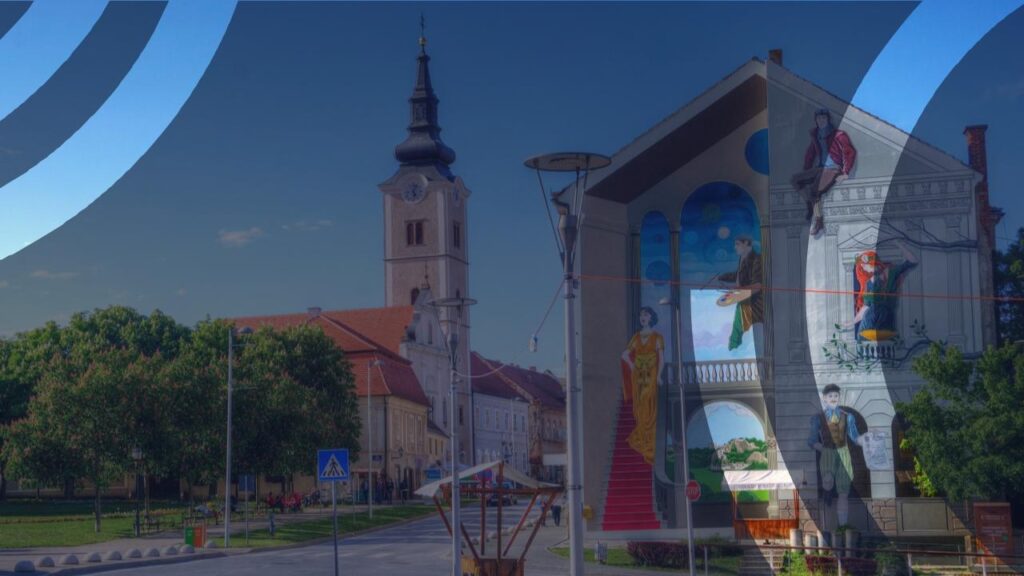
Last year, the City of Križevci, together with the Green Energy Cooperative, entered the European project “Future Cities of South East Europe” with 5 more cities, some of which are the capitals of their countries – Skopje, Sarajevo, Nis and Maribor.

The “Future Cities of SEE” project is part of a much larger process carried out by the European Institute of Innovation and Technology (EIT Climate-KIC) called Deep Demonstration, which is designed to address multiple societal challenges in an integrated and holistic way to create a network of 100 climate-neutral cities by 2030. With this, the city of Križevci has become one of the 15 most important cities in Europe (along with the cities of Amsterdam, Edinburgh, Copenhagen, Helsinki, Krakow, Madrid, Milan, Vienna, etc.) which will receive expert assistance to transform the city into a sustainable and climate neutral city. Thus, these cities will become one of the best cities in Europe for living, working and visiting by 2025. This will ensure that the cities involved in the project by 2025 provide citizens with the foundations of a good life in the areas of housing, health care, education, energy, mobility, food, water, green public spaces, general security and good employment opportunities.

Green Energy Cooperative has been cooperating with the city of Križevci for several years on various projects, the most famous one being the project “Križevci Sunroofs”, also an example of innovative business models of civic financing, which was recognized by the EIT. “.

The project will form a “Yes team” that includes a wide range of different stakeholders – from citizens, city administration, public and private companies and various non-profit organizations that will propose and implement various projects and programs to achieve the vision of a climate neutral city.

To achieve this vision, “Yes Team” has set several goals:

  • new “climate-neutral” innovative models will be developed through the project
  • social innovation will be encouraged by combining “bottom-up” and “top-down” approaches with active involvement of citizens in creating a sustainable and climate-neutral city (one of the activities that leads to this is participatory involvement of citizens in developing a new city strategy for 2021-2030 .)
  • building a community of young change-makers who will work to achieve the vision by surviving political instability and change
  • monitoring change and progress through the process
  • attracting investments with the aim of establishing self-sustainable and climate-resistant city districts and establishing Eco District certificates, implementation of Climathon for the purpose of co-creation of a new financial and organizational model of the city as a path to climate neutrality

The cities that are part of the “Future Cities” project will collaborate through the project, learn from each other, exchange ideas and work together to find solutions to their problems, which is one of the main features of this project.

Križevci will thus become a leader among small towns in Europe (with less than 50,000 inhabitants) and show how and in what way both small towns and citizens can fight climate change.

krizevci